Not all waves are the same
· by Peter A. Giger · 3 min read
Ten times the same frequency, 1000 hertz, ten times the same voltage. And yet a different signal comes out of the device each time. A measurement with an oscilloscope.
What we measured
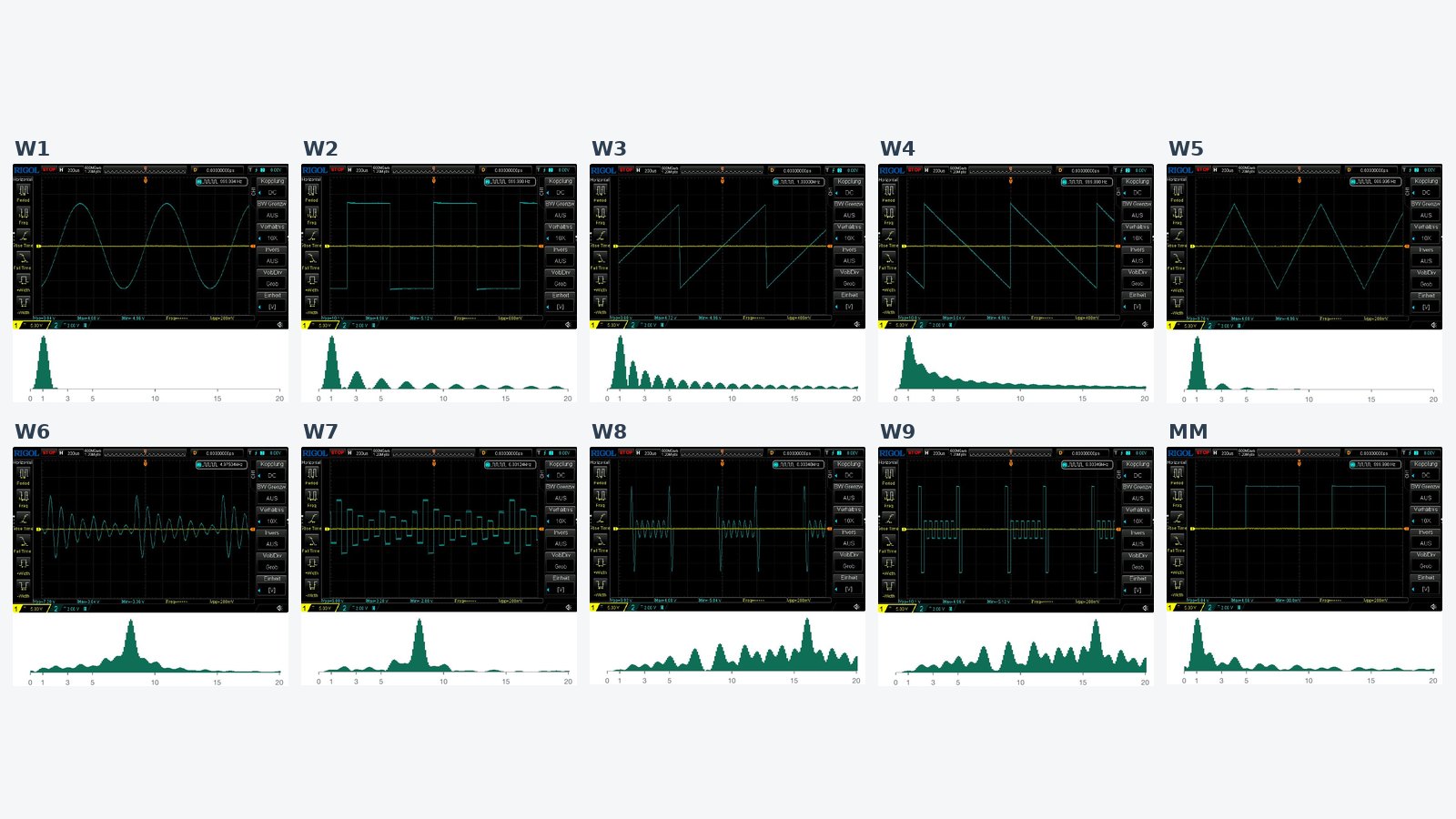
On 18 October 2026 we measured what actually comes out of our GeneratorX Pro (device GEN-001, output G1, Out 1). It was always set to 1000 hertz and 10 volts, with no person connected. Only the waveform was changed. We measured with a Rigol DS1102Z-E oscilloscope.
Below each picture is the frequency mix, calculated from the measured data. Each green bar is a tone contained in the signal. The taller the bar, the stronger the tone.
Sine and triangle
The sine is the simplest oscillation. It contains exactly one tone, the 1000 hertz that were set, nothing else. The triangle looks more angular but is close to it. It brings odd overtones at 3000 and 5000 hertz, but they are very weak.
Square and sawtooth
With the square wave, many more tones are added, all odd multiples of the base frequency: 3000, 5000, 7000 hertz and so on, slowly growing weaker. The sawtooth brings all multiples, including 2000, 4000 and 6000 hertz.
The inverted sawtooth has the same mix as the normal one, only mirrored. It is the standard waveform of the Killing and Healing shells in Spooky2.
Damped forms and H-Bomb
The damped forms look quite different. They consist of decaying bursts of oscillation. With the damped sine, most of the energy lies around 5000 hertz, with the damped square around 6000 hertz and above. The 1000 hertz that were set only give the rhythm in which the bursts arrive.
The H-Bomb forms go even further. Peaks with ringing spread the energy widely, up to more than 10,000 hertz, and with the square even more towards the top. Even the oscilloscope's frequency counter shows 5000 to 9000 hertz for these forms, not 1000.
The peptide shell
The peptide shells use a modulated square wave called MM_ModSquare. It contains the base tone plus even and odd overtones of varying strength.
The voltage changes too
Everything was set to 10 volts. Sine, square, sawtooth, triangle and H-Bomb did deliver around 10 volts peak to peak. The damped forms reached only 6 to 7 volts, the modulated square of the peptide shell 5 volts.
What this means
A program is more than a list of numbers. Reading “1000 Hz” does not yet tell you what is present at the output. Only the waveform decides which tones actually resonate with it. That is why it belongs to every program, and why we never compare programs by their frequencies alone.
Frequency work makes use of these differences in waveform and amplitude. It applies them deliberately, depending on the pathology or to support our cells.
The measurements in detail
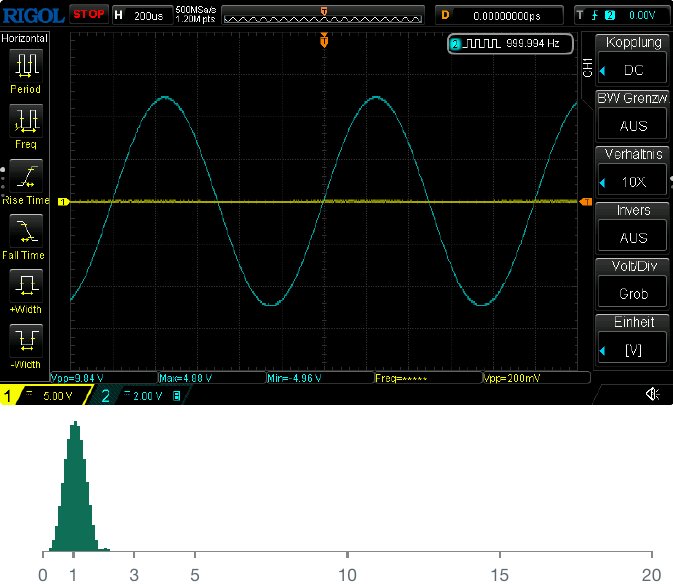
Only 1000 Hz, nothing else.
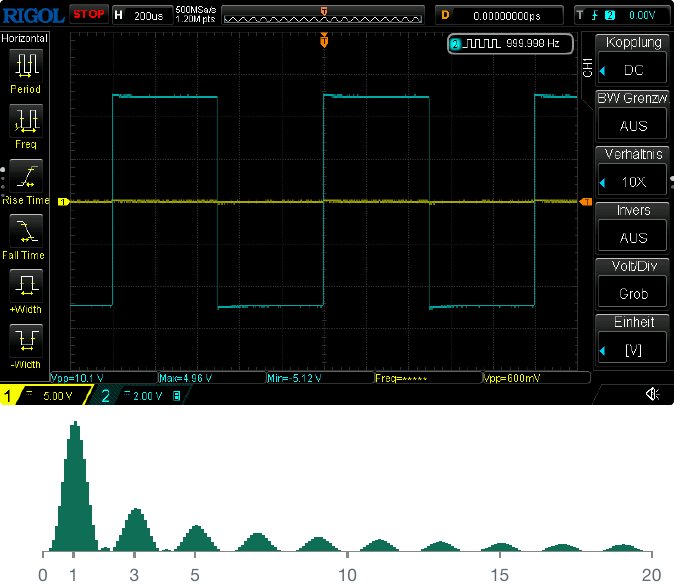
1000 Hz plus 3000, 5000, 7000 Hz …, slowly weaker.
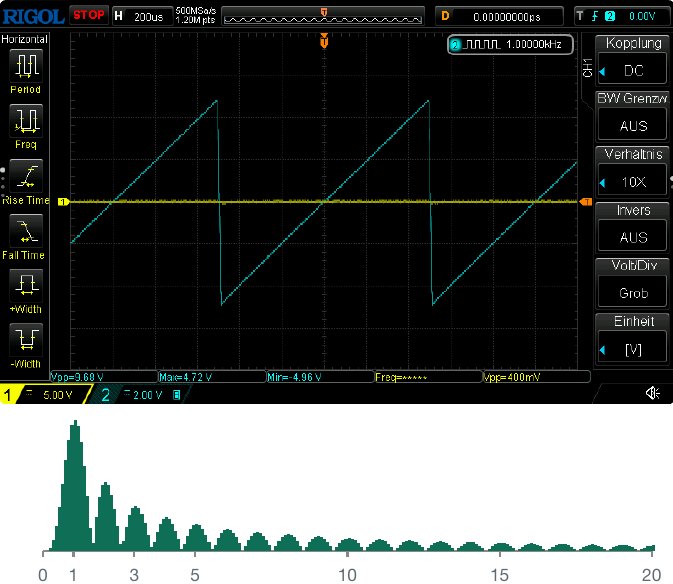
1000 Hz and all multiples: 2000, 3000, 4000 Hz …
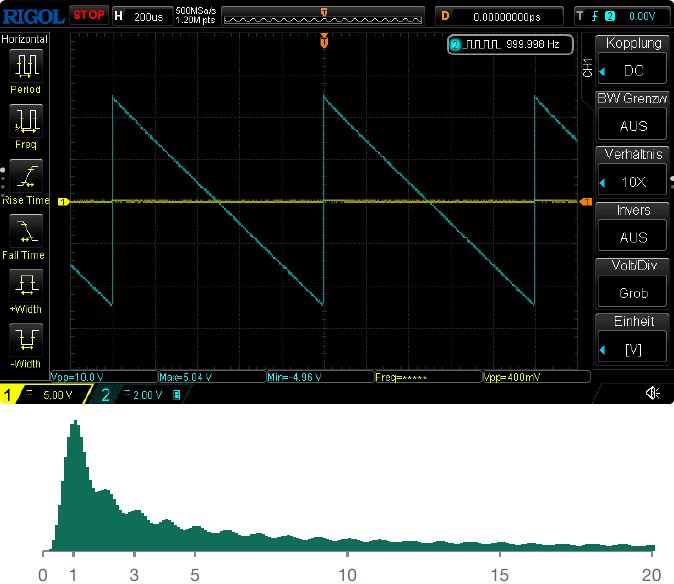
Same mix as the sawtooth, only mirrored. Standard of the Killing and Healing shells.
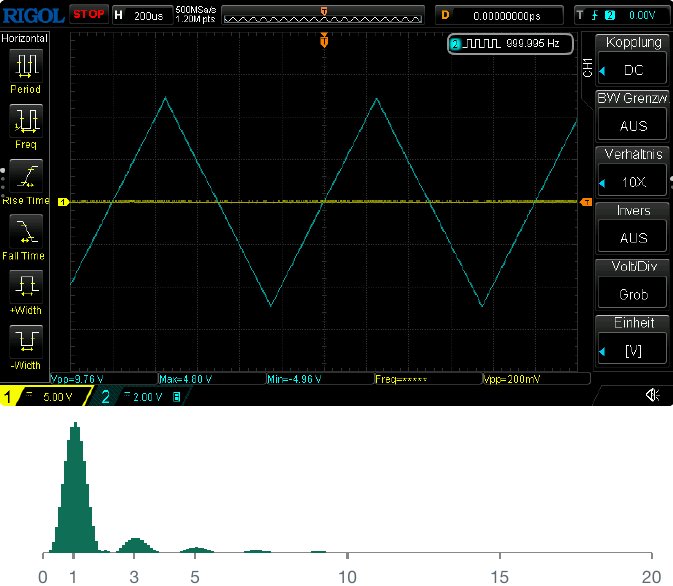
Almost like the sine, the odd overtones are very weak.
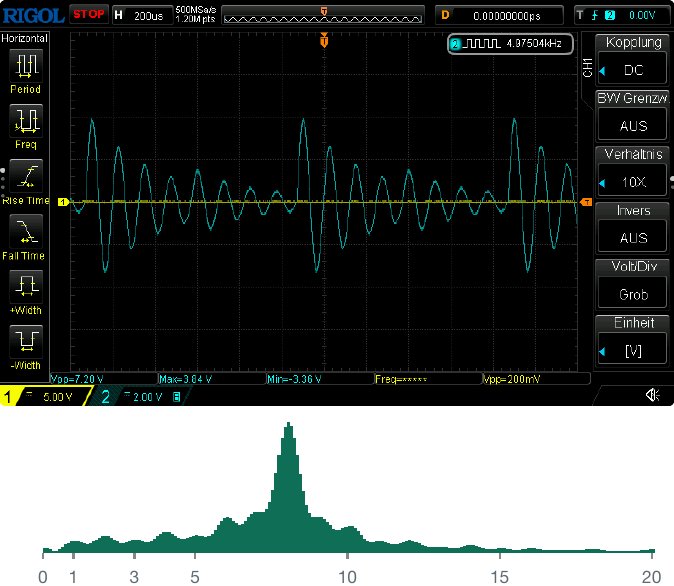
Decaying oscillations, the energy lies around 5 kHz, not at 1000 Hz.
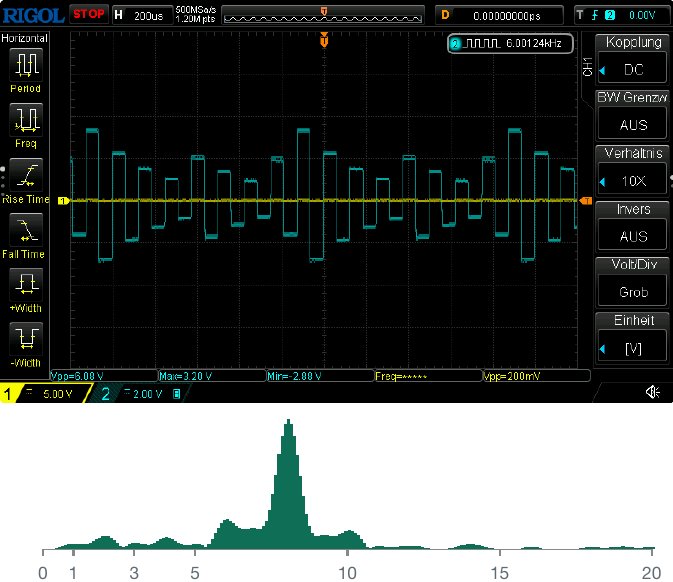
Decaying square bursts, energy around 6 kHz and higher.
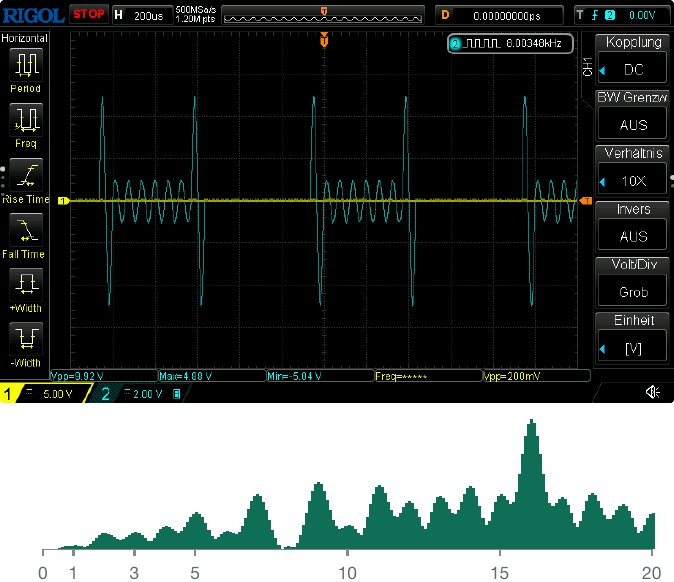
Peaks with ringing, broad mix up to more than 10 kHz.
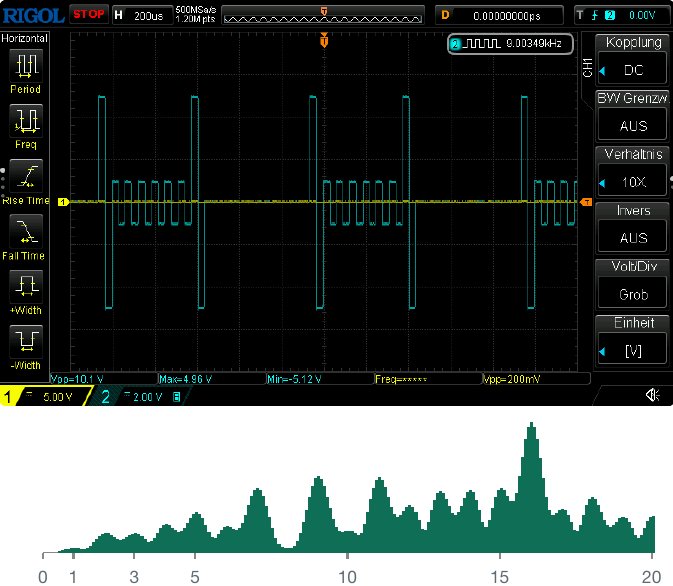
Like H-Bomb, angular, even more high components.
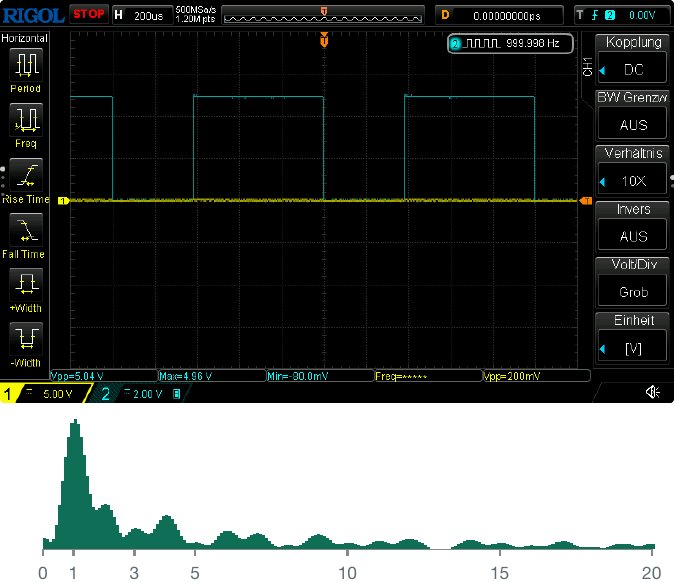
Modulated square: base tone with even and odd components.
Download the measurement report (PDF) ↓
Sources
Peter A. Giger
Articles ›