Not the Pathogen, but the Defence
· by Peter A. Giger · 6 min read
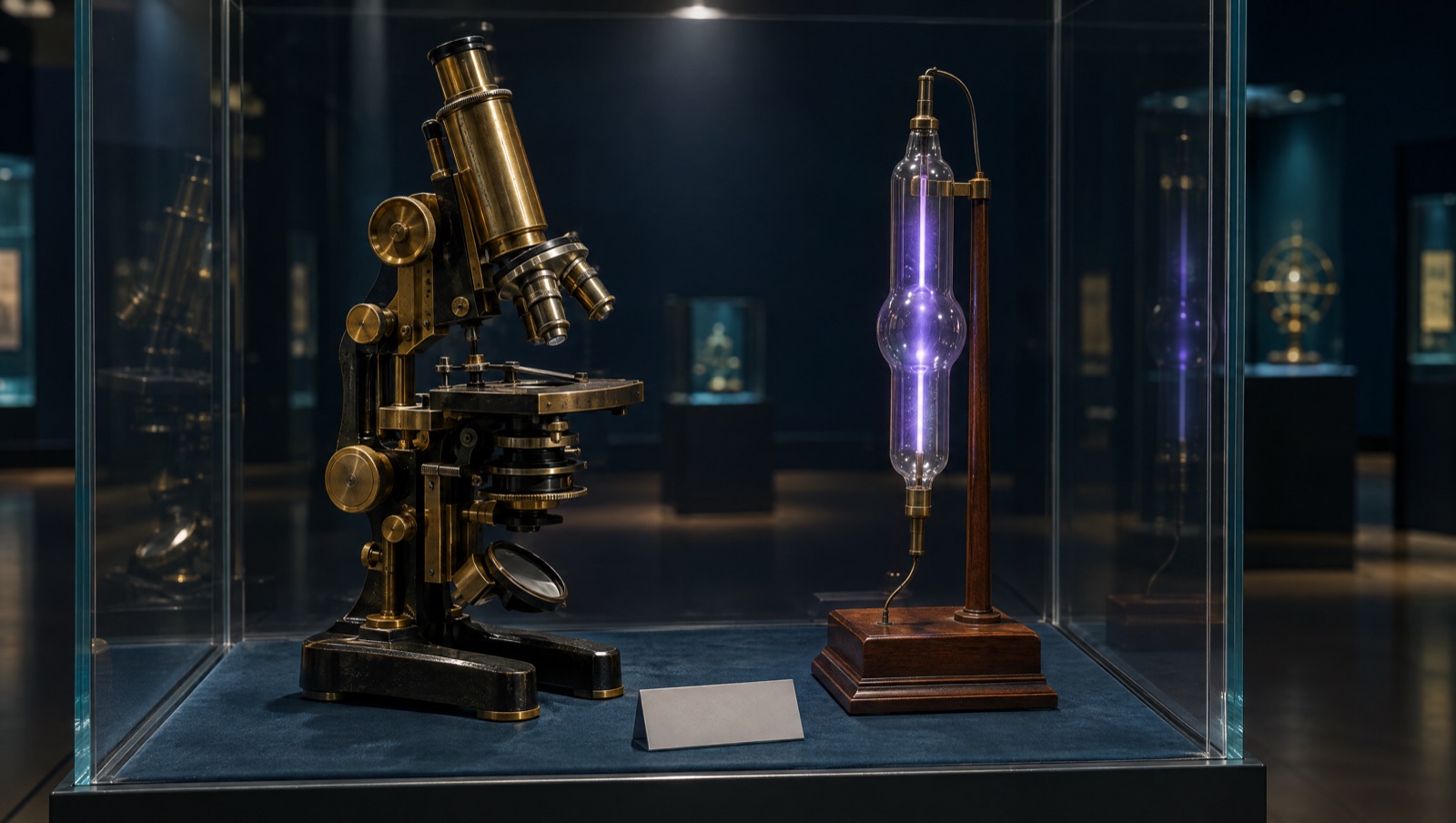
An experiment carried out in Bordeaux in 1975 remains remarkable to this day. It suggests that the fields from Antoine Prioré's device did not attack the parasites directly, but rather supported the immune defences of the test animals. An approach that is re-emerging in research today.
The Question
From 1966 onwards, the parasitologist and immunologist Raymond Pautrizel at the University of Bordeaux investigated how mice and rabbits with a trypanosome infection responded to the fields from Antoine Prioré's device. In several series of experiments, the parasites disappeared from the blood of the irradiated animals.
This raised a simple but crucial question: Does the radiation kill the pathogens directly? Or does it help the body to fight them itself?
MoreLess
The answer to this question is not merely an academic nicety. If radiation acts directly on a pathogen, then it is essentially a kind of physical antibiotic. If, on the other hand, it works through the body's defences, then it is something quite different: a stimulus for the organism's own forces. This would also explain why the effect can vary in strength between different animals.
Pautrizel was the right person for this question. He was not only a parasitologist but also an immunologist. He therefore knew both the pathogens and the defences directed against them.
What Are Trypanosomes?
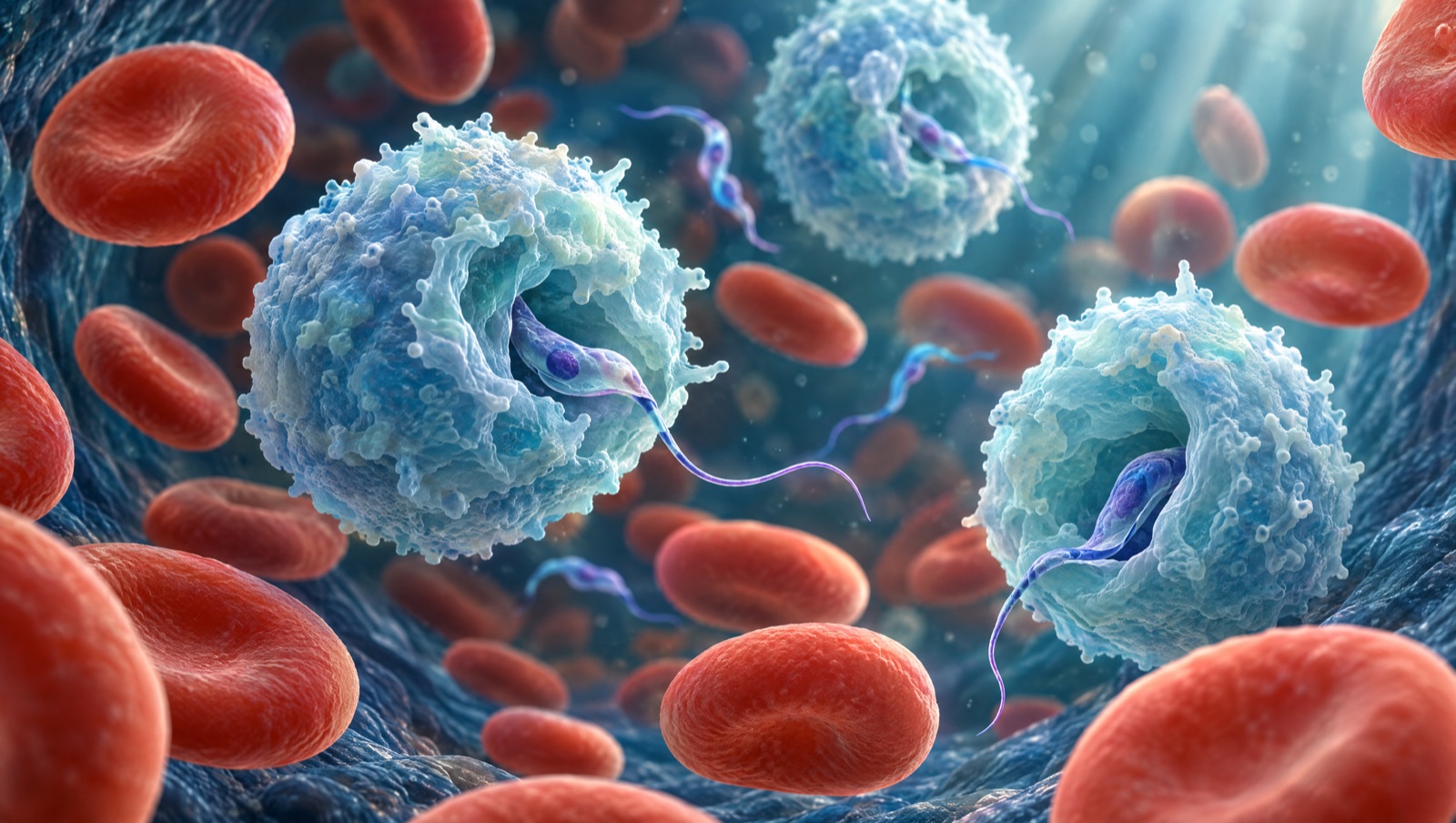
Trypanosomes are single-celled parasites with a flagellum that they use to move through the blood. Related species cause sleeping sickness in Africa and Chagas disease in South America in humans.
In Bordeaux, they worked with Trypanosoma equiperdum, a pathogen that can be studied well in mice and rabbits. For research purposes it has an advantage: it is easy to observe and count how many parasites are present in the blood.
MoreLess
Trypanosomes are difficult opponents for the immune system. They constantly change their surface, like a thief continually changing his clothes. Just as the defences have learnt to recognise one form, the next one appears. This is why trypanosome infections are often protracted.
Precisely for this reason, they were a good model for Pautrizel's question. If a field strengthens the defences sufficiently for them to deal with such an adaptable pathogen, that would be a clear indication of an effect via the immune system.
The fact that the French Ministry of Defence was also interested in these experiments is no coincidence. French troops were stationed in Africa at the time, where sleeping sickness occurs. More on this in the article 'The Oranges of Bordeaux'.
The Chamber Experiment
To clarify the question, Pautrizel's group chose an elegant approach. They inserted a small diffusion chamber into the mice. Inside it lived parasites that were separated from the rest of the body by a fine membrane.
The membrane was constructed so that nutrients and fluid could pass through, but not the body's immune cells. The parasites in the chamber were therefore exposed to the fields just as much as those in the blood, but were protected from the immune system.
The mice were then irradiated.
MoreLess
A diffusion chamber is a well-established tool in biology. It consists of a small ring sealed on both sides with a membrane. The pores in the membrane are so fine that cells cannot pass through, but dissolved substances can.
The clever aspect of the experiment lies in the fact that two groups of parasites are in the same animal, under exactly the same conditions. Both receive the same radiation, the same temperature, the same nutrients. The only difference is whether the immune cells can reach them or not.
The Result
In the chamber, the parasites continued to multiply despite irradiation. In the blood of the same mice, they disappeared.
The researchers' conclusion was: the radiation does not act directly on the pathogens. It acts on the host's defences. Where the immune system can reach, it deals with the parasites. Where it is blocked off, it does not.
The work appeared in April 1975 in the Comptes rendus of the Académie des sciences. A week later, a second note followed with the revealing title 'Stimulation of the defence of the trypanosomised mouse by radiation from a magnetic field and electromagnetic waves'.
MoreLess
One might object that the chamber's membrane shielded the fields. However, electromagnetic fields penetrate a thin membrane without difficulty, just as radio waves penetrate a room wall. The parasites in the chamber were therefore exposed to the radiation. What they lacked was only contact with the immune cells.
The experiment was thus a strong argument for the researchers' thesis. It did not prove exactly how the defences were strengthened. But it made it very probable that the effect worked through the animal's body and not through a direct attack on the pathogens.
Further Evidence in the Same Direction
The chamber experiment did not stand alone. Several other results from Bordeaux fit the same picture.
In 1972, Pautrizel reported to the Ministry of Defence in a final report that the fields stimulate the production of antibodies. In 1975, he reported in the Journal of Protozoology that chronically infected rabbits recovered. And in 1978, a note showed that old mice respond more weakly to irradiation than young ones.
MoreLess
The result with the old mice is particularly revealing. If the fields attacked the pathogens directly, the age of the mouse should play no role. After all, the parasites are the same. However, if the fields work through the defences, it is to be expected that older animals would respond more weakly, because defences also decline with age.
The earlier tumour experiments on rats and mice from 1964 to 1966 showed a similar pattern. The animals were not cured, but the tumours regressed significantly, there were fewer metastases in the lymph nodes, and the animals lived longer. This too can be interpreted as support for the body's own defences.
In addition, in 1969 there was a study on rabbits that were fed a very high-cholesterol diet. There too, the researchers observed changes in lipid metabolism under the fields.
The Same Idea, Today
Fifty years later, the idea resurfaces, quite independently of Prioré. At the Leibniz Institute for Plasma Science and Technology in Greifswald, research is being conducted on how cold plasma acts on tumours. One of the explanations being discussed: the plasma draws the immune system's attention to the tumour cells.
Here too, then, it is not just about a direct attack, but about a stimulus for the defences.
MoreLess
Specialists speak of immunogenic cell death. What is meant is that tumour cells die in such a way that the immune system becomes aware of them and learns to recognise them. The role of reactive oxygen and nitrogen compounds that form in plasma is also being discussed.
The clinical trials on this are still small and in their early stages. In 2015 and 2018, doctors at Greifswald University Medicine reported on people with advanced head and neck tumours in whom cold plasma alleviated symptoms and in some cases caused the tumour to partially regress. Not everyone responds.
Prioré and Greifswald have little in common technically. Prioré worked with fields from a plasma tube; Greifswald directs the plasma directly onto the tissue. What they have in common is the idea that the body itself is the most important participant. More on this in the article 'Plasma – the Fourth State'.
Context
The experiments in Bordeaux were animal experiments from the 1960s and 1970s, with a device whose precise construction was never disclosed. Other laboratories were only partially able to replicate the results with simpler devices. The results cannot be extrapolated to humans, and they are not a promise of cure.
What remains remarkable is the approach: not to combat a pathogen directly, but to strengthen the body's own defences. This question continues to occupy research to this day.
MoreLess
Anyone wishing to read the original papers themselves will find all the notes in the Comptes rendus of the Académie des sciences on Gallica, the digital library of the French National Library. They are written in French and usually only a few pages long.
The most important papers for this article are the two notes from April 1975 and the note from September 1978. The exact references are given below in the sources.
Sources
- Pautrizel R. u. a.: Vermehrung von Trypanosoma equiperdum in einer bei der Maus implantierten Diffusionskammer. C. R. Acad. Sci. Paris, Série D, 280, 21. April 1975
- Pautrizel R., Prioré A., Mattern P., Pautrizel A.-N.: Stimulation des défenses de la souris trypanosomée. C. R. Acad. Sci. Paris, Série D, 280 (1975), S. 1915–1918
- Pautrizel R., Prioré A., Pautrizel A.-N., Chateaureynaud-Duprat P.: Einfluss des Alters der Maus. C. R. Acad. Sci. Paris, Série D, 287 (1978), S. 575–578
- Jean-Michel Graille: Le dossier Priore. Une nouvelle affaire Pasteur? Paris 1984
- Pautrizel R. u. a.: Heilung der chronischen Trypanosomiasis des Kaninchens durch kombinierte Magnetfelder und modulierte elektromagnetische Wellen. Journal of Protozoology 22 (1975), Nr. 3, Abstract A84
- Metelmann, von Woedtke, Weltmann (Hg.): Plasmamedizin. Springer 2016
Peter A. Giger
Articles ›